
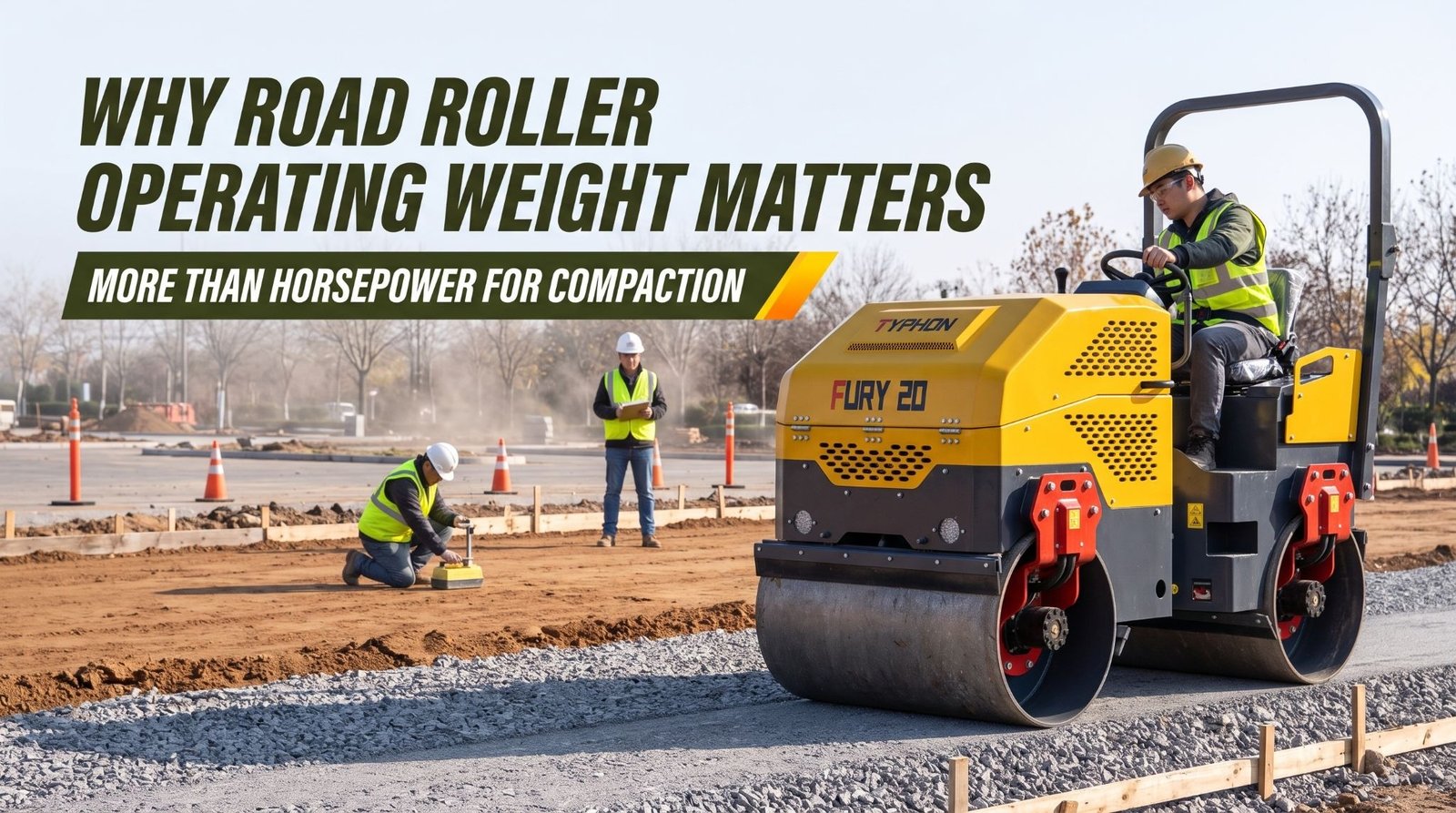
Road construction and site preparation projects require suitable compaction to create stable foundations for asphalt, soil, and aggregate surfaces. Selecting a roller based mainly on engine horsepower can lead to poor compaction results when the machine’s weight, drum design, and vibration system do not match the material being handled. Choosing equipment according to actual site conditions helps contractors meet density requirements and avoid unnecessary rework.
Thank you for reading this post, don't forget to subscribe!Compaction performance depends on how effectively the roller transfers force into the material. Operating weight and drum weight influence the static force applied to the surface, while drum design, vibration frequency, and amplitude affect how energy reaches deeper layers. Material type, moisture content, layer thickness, and travel speed also determine how many passes are needed and how evenly the surface is compacted.
Equipment selection should begin with identifying the materials, required density, and project specifications. Contractors should compare roller weight, drum configuration, vibration settings, and operating capabilities rather than relying on engine power alone. Matching the machine to each compaction stage, maintaining consistent travel speed, and checking density during the work help achieve reliable results while controlling project time and operating costs.
How Operating Weight Creates Compaction Force
Road roller operating weight is the total working mass of the machine, typically including fuel, fluids, the operator, and standard equipment such as the rollover protective structure. Manufacturers often follow definitions such as ISO 6016 for operating mass, but configurations vary. Ask which items each published figure includes, since water tanks, optional cabs, and ballast can change operating weight by a meaningful amount. That number matters because gravity turns the machine’s mass into a downward compaction force on every square inch of drum or tire contact.
As the roller travels over a layer, that static load compresses the material and pushes particles into a tighter arrangement. Air voids shrink, the particles interlock, and density rises. This process is called static compaction, and it’s the foundation of every roller’s work, with or without vibration. A heavier roller applies more static compaction force across the same contact area, which helps it compact thicker layers and stiffer materials.
Weight alone doesn’t guarantee that you’ll meet density requirements. The contact area changes as the drum sinks into soft material, which changes contact pressure. Material type, moisture content, layer thickness, and drum configuration all affect the result. A heavy roller on a saturated clay may rut and pump water to the surface rather than densify the layer. A heavy roller on a thin asphalt lift may crush aggregate or shove the mat. Operating weight sets the starting point for compaction force, and the rest of the machine and the operating method must suit the work.
Key takeaway: Road roller operating weight creates the static compaction force that compresses material. Compare drum module weight and static linear load, not just total machine weight, and remember that weight must still suit the material and layer.
The Difference Between Operating Weight and Engine Horsepower
Operating weight and horsepower describe completely different things. Road roller operating weight is mass, and it contributes directly to the force pressing on the ground. Road roller horsepower measures how quickly the engine can do work. It powers the hydrostatic drive, the vibration pump, steering, water spray systems, and cooling fans. One pushes material together. The other keeps the machine moving and its systems running.
Horsepower can’t be converted into downward force on a roller. On a wheel loader or dozer, extra engine power can turn into more pushing or pulling force, up to the limit of traction. A roller doesn’t push material forward to compact it. It presses down. The engine helps the machine reach and hold the right travel speed and keeps the vibration system at its rated vibration frequency. Beyond that point, more horsepower adds little to compaction performance.
Key takeaway: Operating weight contributes directly to compaction force, while road roller horsepower moves the machine and powers its systems. Select a roller for its weight and compaction specifications first, then confirm the engine suits your site.
How Drum Weight and Design Affect Compaction

The drum is where the roller meets the material. It transfers drum weight and vibration energy into the layer, and its design decides how that energy is applied. Two rollers with similar operating weights can produce very different compaction performance because their drums are built for different jobs.
Smooth drum rollers are the standard choice for asphalt and granular materials. A smooth steel drum spreads force evenly across its full width, leaving a flat, sealed surface. Smooth drum roller models handle sand, gravel, crushed aggregate, and asphalt well, because these materials compact as particles rearrange under pressure and vibration. On cohesive soils, however, a smooth drum often compacts only the top few inches and seals the surface, leaving the lower part of the lift under-compacted. That is exactly what happened on the clay subgrade in the opening scenario.
Padfoot drum rollers are designed for cohesive soils such as clay and silt. The drum carries rows of raised pads that penetrate the lift and concentrate the drum weight on a much smaller contact area. That concentrated pressure and kneading action work the soil from the bottom of the lift upward. As the layer densifies, the pads “walk out” and ride higher on the surface, which gives operators a useful visual sign of progress. Sheepsfoot drums, an older design with longer, narrower feet, work on the same principle and are common on heavier towed or self-propelled compactors. Many manufacturers offer bolt-on padfoot shell kits that fit over a smooth drum, giving one machine more flexibility.
Drum width, diameter, and shell thickness all shape compaction behavior. A wider drum covers more ground per pass, but spreads drum weight across more width, which lowers static linear load. A larger drum diameter rolls more easily over loose material and reduces shoving on asphalt, since it meets the surface at a flatter angle. Shell thickness affects drum weight and wear life. Narrow drums suit trenches, sidewalks, and tight areas, while wider drums suit open roadways and large pads.
Weight distribution between the front and rear sections also matters. On single-drum soil compactors, weight biased toward the drum improves compaction force, while weight on the rear axle improves traction and gradeability. On tandem asphalt roller models, a balanced split helps both drums compact evenly. Some tandem rollers carry different weights on each drum, and operators may choose which drum leads based on the mat. Check the drum module weight for each drum, not just the total.
Pneumatic tire rollers use a different design altogether. Several rubber tires apply a kneading action as they flex, which seals asphalt surfaces and helps close the mat. Their compaction force depends on wheel load and tire inflation pressure, and many models accept ballast in the frame so contractors can raise operating weight for heavier work. Operating tips for compaction include maintaining consistent tire pressure, keeping the roller moving at a steady speed, and using overlapping passes to achieve uniform density. Buyers comparing pneumatic rollers should review the maximum ballasted weight, wheel load, and recommended tire pressures alongside base operating weight.
Never assume two rollers with similar total weights will compact in the same way. Compare drum module weight, drum width, static linear load, drum diameter, drum type, and the manufacturer’s recommended applications for each model.
Key takeaway: Roller drum design shapes how drum weight reaches the material. Use smooth drum rollers for asphalt and granular materials, padfoot drum rollers for cohesive soils, and compare drum module weight, width, and diameter rather than total weight alone.
Operating Weight and Vibration Performance
Vibratory rollers combine static weight with dynamic force. The static load from the road roller operating weight presses the material together. The vibration system adds rapid, repeated impacts that help particles rearrange and settle into a denser structure. Together, they let a vibratory roller reach density requirements in fewer passes and at greater depth than a static roller of the same weight.
Most vibration systems use a rotating eccentric weight inside the drum. A hydraulic motor spins a shaft carrying an off-center mass. As it rotates, it generates centrifugal force that alternately drives the drum into the material and lifts it slightly. Rubber isolation mounts keep that energy in the drum rather than the frame. The drum weight provides the static load and the mass that the eccentric moves, so a heavier drum module typically supports a more powerful vibration system.
Two settings define how vibration works. Vibration frequency is the number of vibration cycles per second, measured in hertz or vibrations per minute. Amplitude is the distance the drum moves up and down from its resting position, published as nominal amplitude under standard conditions. Together, they determine centrifugal force, which rises with the eccentric mass and increases with the square of shaft speed. In theory, doubling vibration frequency quadruples the force.
Operating weight and vibration work as a pair. A heavy drum with low amplitude may compact thick lifts slowly. A light drum with high amplitude may bounce on stiff layers instead of compacting them. This bouncing, often called drum decoupling, occurs when the drum loses steady contact with the surface. It pounds the layer unevenly and can loosen material that was already dense. Some modern rollers detect bouncing and automatically reduce amplitude to protect compaction performance.
Key takeaway: Vibratory rollers combine static weight with dynamic force set by vibration frequency and amplitude. Match drum weight and vibration settings to the layer, and follow manufacturer guidance to avoid bouncing, cracking, and ground vibration problems.
Choosing Roller Weight for Different Materials

Different materials need different compaction approaches. The right road roller operating weight, drum type, and vibration settings depend on the material, layer thickness, moisture content, and the project’s density requirements. Matching the machine to the material is what turns a capable roller into consistent, passing test results.
Asphalt work calls for density without damage. An asphalt roller must reach target density while the mat sits in its specified temperature window, without crushing aggregate, shoving the mix, or leaving marks. Many paving crews use a vibratory tandem asphalt roller for breakdown rolling behind the paver, followed by an intermediate roller, often vibratory or pneumatic. A finish roller then removes marks in static mode. Thicker lifts and stiffer mixes often benefit from heavier tandem rollers, while thin overlays, bike paths, and patching may need lighter machines. A common guideline is that lift thickness should be at least about three times the nominal maximum aggregate size. Very thin lifts, often around 1 inch or less, are frequently rolled in static mode only.
Water also affects asphalt roller operating weight. Tandem asphalt rollers carry water tanks to keep drums wet and prevent pickup. A full tank can add several hundred to more than a thousand pounds depending on model, and the machine gets lighter as the water is used. Confirm whether the published operating weight includes full water tanks, and keep tanks filled consistently so compaction performance doesn’t drift through the shift.
Build a rolling pattern on each job with a test strip. Record the roller, settings, speed, and number of passes that achieve the required density, then hold those settings consistent. Confirm results through the project’s specified testing method, such as nuclear density gauges, sand cone tests, or asphalt cores. Intelligent compaction systems and compaction meter values can guide passes, but the specified tests decide acceptance. Nuclear gauges contain radioactive sources, so only trained, authorized personnel should use, transport, and store them.
Key takeaway: Match road roller operating weight, drum type, and vibration settings to the material and lift thickness. Use tandem rollers for asphalt, smooth drum rollers for granular base compaction, and padfoot drum rollers for cohesive soil compaction, then confirm density with a test strip.
Why Horsepower Still Matters During Compaction Work
Operating weight has the most direct influence on compaction force, but road roller horsepower still plays a supporting role every hour the machine runs. The engine moves the roller, drives the vibration system, and powers every hydraulic and electrical function on board. A roller with too little power for its weight and site will struggle to keep its pace, and inconsistent movement hurts compaction performance.
Vibration draws significant power. The vibration pump and motor must spin the eccentric at its rated vibration frequency, and the start-up of vibration can place a brief, heavy demand on the system. When the engine lacks reserve, frequency can sag under load, which reduces centrifugal force and compaction performance. Many manufacturers publish gradeability figures with vibration on and off, and the vibration-on figure is often lower. Review both, and ask how each was measured.
Heavier machines need proportionally more power. As road roller operating weight rises, the engine must move more mass and drive a larger eccentric. Manufacturers size engines to their weight classes, so a well-matched roller has enough power for its intended work. Problems usually arise when a machine works outside its design range, such as a light roller on steep embankments or a heavy machine run at high altitude without adequate engine capacity.
Altitude, heat, and duty cycle affect usable power. Thin air at high elevations reduces combustion efficiency, and many engines lose power above a stated altitude. Hot weather strains the cooling system, and many engines derate to protect themselves. Asphalt crews often work long, hot shifts beside a paver that won’t wait. Confirm the manufacturer’s altitude rating and cooling capacity for the conditions you face.
Treat road roller horsepower as part of the complete performance package. Confirm that the engine provides enough reserve for your grades, vibration settings, and site conditions. Don’t let a larger horsepower figure replace an evaluation of operating weight, drum design, static linear load, and vibration capability.
Key takeaway: Road roller horsepower maintains steady travel, powers vibration at rated frequency, and supports grade performance. Confirm adequate power for your site, but never let horsepower replace an evaluation of operating weight and compaction specifications.
Conclusion
Road roller operating weight contributes directly to the static compaction force applied through the drum or tires. Drum module weight and static linear load indicate how that force is distributed across the material. Drum design also affects compaction performance, with smooth drum rollers commonly used for asphalt and granular materials, while padfoot drums are suited to cohesive soils. Vibration frequency and amplitude add dynamic force to improve compaction depth and efficiency when matched to the material and layer thickness. Engine horsepower keeps the machine moving and its systems operating, but it cannot replace the compaction force generated by machine weight and vibration. When comparing rollers, consider the materials your crews compact, typical lift thicknesses, and required density standards. Request operating weight, drum module weight, drum width, static linear load, drum type, vibration frequency, amplitude, centrifugal force, gradeability, and engine specifications for each model. Arrange a demonstration or test strip using representative materials, then verify compaction results through appropriate density testing. This approach helps you select a roller that meets project requirements, maintains productivity, and delivers consistent compaction across different jobsite conditions.
Frequently Asked Questions
Why is operating weight important for a road roller?
Road roller operating weight contributes to the static force transferred through the drums or tires during compaction. The weight carried by the drum, divided by drum width, gives the static linear load, which is one of the most useful figures for comparing compaction force between machines. Operating weight also supports the vibration system, since a heavier drum module typically carries a more powerful eccentric.
Does a heavier road roller always compact better?
No. The correct weight depends on the material, layer thickness, drum design, and required compaction method. A heavy roller can crush aggregate or shove thin asphalt lifts, and it may rut or pump saturated clay. Match operating weight, drum type, and vibration settings to the material, then confirm density requirements with a test strip and the project’s specified testing method.
What does horsepower do on a road roller?
Road roller horsepower supports travel, grade performance, hydraulic functions, and operation of the vibration system. It helps the machine hold a steady working speed and keeps vibration frequency at its rated level under load. It doesn’t add downward compaction force, which comes from operating weight and the vibration system.
What specifications should buyers compare when choosing a road roller?
Compare operating weight, drum module weight, drum type, drum width, static linear load, vibration frequency, amplitude, centrifugal force, engine power, gradeability with vibration on and off, and recommended material applications. Ask what each operating weight figure includes, such as full water tanks or ballast, and request every key specification in writing for the exact configuration you plan to buy.